Denationalizing the ‘Map’ (Reflections on the ‘Real Armenia Ideology’)

"Past" writes.
— Nation versus population: The “nation,” composed of the members of ethnic Armenians, does not have political or legal agency, whereas the population of Armenia, composed of its citizens, is endowed with political and legal capacity. Non-Armenian citizens of Armenia are part of its population, whereas non-citizen Armenians are not.
Here, the “basic truth” that acts as the lure is the technical/legal correctness of the statement. Citizens are in fact defined through legal and political terms, whereas members of an ethnicity are not, unless the country they reside in and have citizenship of has made special provisions for their rights as a minority. But, as in the first point above, the implications of that technically correct statement are to strip the state of its national heritage and character, precisely the features that the nation strived to keep and protect while it was stateless.
— The state as a tool for prosperity: The popular Armenian saying “stay where the bread is” is invoked, the idea being that if the “bread,” i.e., prosperity is secured in Armenia, people will stay and not emigrate in search of a more prosperous life elsewhere. The state is the product of people’s search for prosperity, and prosperity is the necessary condition for achieving happiness. A corollary tenet is “Get rich and enrich.” Living well, another popular Armenian folk saying, is the ultimate objective. Individuals, society and the state should be engaged in getting rich and enriching each other, of course all within a legal and just economic and social environment.
In these tenets, the “basic truth” and lure is the compelling call for “living well,” which is acceptable to any rational being, and, as mentioned above, is part of the Armenian popular psyche.
Equally true is the importance of a strong and developed economy. Armenia must get rich if it hopes to survive, let alone compete, in this neighborhood. But to say that “the state is the product of people’s search for prosperity” not only reveals a total lack of understanding of how states are founded, but also, like the previous points, contains a subliminal message for people to forget national causes, rights, history, self-determination, independence and dignity, and focus on living well.
The first Republic was not the product of its founders’ search for prosperity. It was the product of their quest for self-determination, independence, and freedom to be Armenian in their own state rather than second-class citizens in someone else’s. It emerged from the ashes of the Genocide, against all odds, with almost superhuman courage and vision and national purpose. The search for prosperity was probably the furthest thing from the minds of the people who founded the First Republic in the thick of the existential struggle in 1918, and, at the most, prosperity may have been looked upon as a welcome side-effect of Independence, not the incentive to reach it.
Even though the current republic did not achieve its independence through the herculean struggle of the first, it is nonetheless the successor of the first. To reduce it to the product of the search for prosperity is not only factually wrong, but it also robs the statehood of its historic significance as the first Armenian state after 543 years of statelessness.
— Man is the highest value: This principle makes it immediately clear that its central point is the primary needs of man — i.e., back to living well. It bluntly downplays “high politics” and “high values,” whereby, it claims, often the more basic needs of man get neglected. This section hastens to add that, in addition to the basic needs, man also has spiritual and cultural needs and proceeds to list a set of national values of the Armenian people — meaning the national values of the citizens of the Republic of Armenia. Many of the listed values are subject to interpretation, in the sense that they can be brought to the fore or sent back as a given situation may require. For example, “Pan Armenian potential, Armenian diaspora” is listed as one of the national values of the population of Armenia, along with the country’s biodiversity and cuisine, but it is not clear how the diaspora’s status as a national value of the citizens of Armenia manifests itself.
— Reflection: Perhaps one of the most baffling assertions in the new ideology is about transformation and reflecting on everything. “The truth that has not been reflected upon is no longer the truth, the goal that has not been reflected upon is an end in itself, the conviction that has not been reflected upon is an impression left over from the past, the ideal that has not been reflected upon, is incomplete.”
These are not harmless thoughts meant as an innocuous philosophy of life. They constitute the preamble to question all national values, aspirations, goals, convictions, historical facts, historical rights, including facts such as the Genocide. The truth, if it is truly the truth, is the truth whether anyone reflects on it or not. It is one thing to question premises and theories and subject them to the rigorous test of scientific validation, and an entirely different thing to try and validate or negate a documented historical truth by simply “reflecting” on it. What exactly is an “incomplete ideal”? And how exactly does one make an incomplete ideal “complete” by reflecting on it?
— The concept of independence — defined as dependence over many instead of dependence over few — is actually interesting, and in line with the requirements of being a member of an integrated, interdependent, global community. It also suggests a strategy of diversifying strategic alliances, which Armenia needs and is correct to pursue. The only word of caution here is to emphasize the need for nuanced and competent diplomacy in order to avoid burning bridges while diversifying alliances from few to many.
— Peace and Security. Finally, probably the most serious shortcoming of the Real Armenia national ideology is in its notion of peace and security. I will not go over all the assertions made in this section, but will focus on just one claim, namely, “Peace is the most reliable guarantee of security.” Nothing could be further from the truth. Peace has rarely, if ever, guaranteed security. The opposite is true—i.e., once national security is guaranteed through a comprehensive and advanced defense system, peace can be achieved. Peace is the result of security, not its cause or its guarantor.
The most common justification given for these policies is national security, based on the fact that the government is negotiating peace with two militarily very strong neighbors. This justification simply does not hold water, because a lot more is being conceded than is necessary to avoid another unequal war, and, as stressed earlier, these policies are not simply short-term tactical moves that aim to strengthen national security, but have the ultimate objective to permanently transform and de-nationalize the collective Armenian self-awareness.
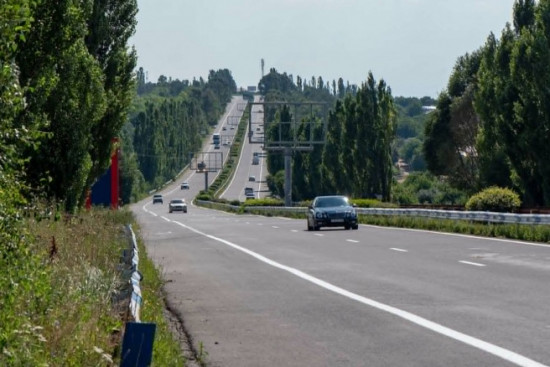
Paradoxically, the “Real Armenia Ideology” is being promoted while the public is lulled by a series of successes unrelated to that ideology. It is effective because it is like making suggestions to people under hypnosis. The hypnotizing successes include advances in education, healthcare, science and technology, most of which are driven to a large extent by diasporan initiatives; certain visible infrastructure projects such as road construction; advances in cooperation with the United States; and the promise of a yet to be formalized peace.
It is important to note here that the above are real and positive trends which could have been achieved equally well if not better without adopting the anti-national tenets of the new “ideology,” yet both the government and the gullible segment of the public associate the two and see it as a package deal. One of the consequences of this association is to create self-doubt about all traditional values and aspirations.
The ultimate purpose of sovereignty is self-determination, in its broadest and deepest sense — that is, self-determination by the nation’s own internal natural evolution and dynamics, unimpeded by external pressures and influences. Thus, self-determination and de-nationalization cannot coexist. The latter negates the former. Sovereignty without genuine self-determination is a farce. And therein lies the internal contradiction of the “Real Armenia Ideology.”
 Жители Тигранашена не имеют права собственности и живут в постоянном ощущении угрозы (Видео)
 Геополитическое балансирование — на «нитке». «Паст»
 Ужас на дорогах Армении. «Паст»
 С кем же на самом деле встретился Никол Пашинян? «Паст»
 Пашинян втягивает Армению в очень опасную «игру». «Паст»
 ВТБ (Армения) упростил процесс автокредитования на первичном рынке
 Трамп принял 10 требований Ирана перед двухнедельным перемирием
 Армия Ирана пригрозила отбросить военных США в период до каменного века
 Власти уже «цепляются за соломинку». «Паст»
 Одним из главных рисков выборов является распыление голосов. «Паст»